
Highlights
-
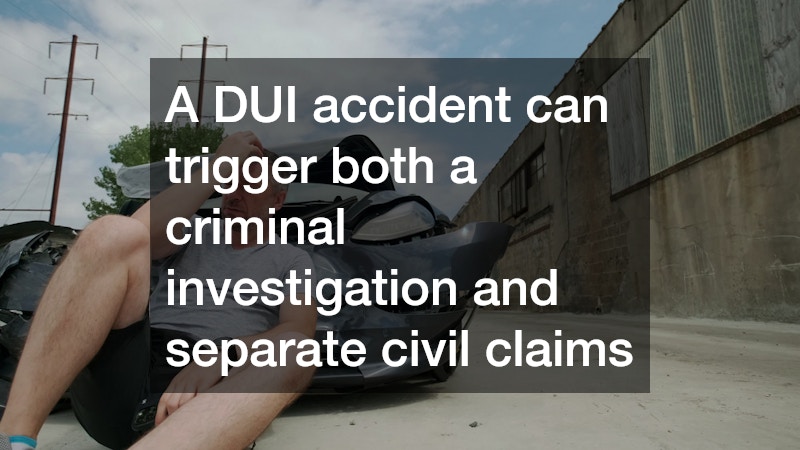
A DUI accident can trigger both a criminal investigation and separate civil claims involving injuries, property damage, and insurance.
-
Police may use observations, field sobriety testing, breath testing, blood testing, witness statements, and crash evidence when investigating suspected impairment.
-
DUI consequences vary by state and circumstances but can include fines, license restrictions, ignition interlock requirements, probation, or incarceration.
-
Injured people should document medical treatment, vehicle damage, lost income, and other accident-related losses that may become relevant to an insurance claim or lawsuit.
-
Serious injuries or fatalities can expose an impaired driver to substantially more serious criminal charges and penalties.
-
A DUI accident lawyer can investigate the collision, preserve evidence, communicate with insurers, and evaluate potential sources of compensation for an injured person.
What Usually Happens Immediately After a Suspected DUI Accident?
The immediate priorities after a DUI accident are addressing injuries, securing the crash scene, and beginning the law-enforcement investigation. Police responding to the collision may speak with drivers and witnesses, examine the vehicles and roadway, and look for indications that alcohol or drugs contributed to the crash.
According to the National Highway Traffic Safety Administration, blood alcohol concentration can be measured through breath or blood testing, and alcohol increasingly affects driving abilities as a person’s BAC rises. Depending on the circumstances and applicable state law, a suspected impaired driver could be arrested at the scene or face charges after additional investigation. Meanwhile, injured motorists and passengers may be transported for emergency treatment while officers document information that could later become important in both criminal and civil proceedings.
What Evidence May Be Collected After the Crash?
Investigators and attorneys can use numerous forms of evidence to reconstruct what happened and determine whether impairment contributed to the collision. Some evidence is gathered immediately, while other information may need to be obtained from businesses, medical providers, government agencies, witnesses, or electronic sources. Potential evidence can include:
-
Police reports and officer observations
-
Breath or blood alcohol test results
-
Field sobriety test information
-
Photographs and videos from the accident scene
-
Vehicle damage and physical evidence
-
Surveillance or traffic-camera recordings
-
Witness statements
-
Medical records documenting injuries
-
Phone or electronic records when legally obtainable
-
Receipts or other information relevant to alcohol consumption
A DUI accident lawyer representing an injured person may conduct a separate investigation instead of relying exclusively on the criminal case. Preserving evidence early can be important because videos, physical evidence, and witness recollections may become harder to obtain as time passes.
Can the Driver Face Criminal Charges After a DUI Accident?
Yes, a driver suspected of impairment can face criminal charges independently of any lawsuit or insurance claim arising from the accident. The exact charges depend on state law, the evidence, the driver’s history, and whether the collision caused injuries or fatalities. NHTSA states that impaired-driving charges can range from misdemeanors to felonies and that potential consequences can include license revocation, fines, and incarceration. The agency also notes that enhanced penalties can apply in circumstances such as high BAC levels, repeat offenses, crashes causing personal injury, or vehicular homicide.
The criminal prosecution is primarily concerned with whether the accused driver violated criminal law. An injured person’s claim, by contrast, generally focuses on responsibility for the collision and compensation for resulting losses. The two processes can therefore proceed separately even though they arise from the same crash.
What Happens to the Driver’s License?
A suspected DUI can create driver’s-license consequences in addition to the criminal court process. The precise procedures vary by jurisdiction, but suspension or revocation may result from an impaired-driving offense or from circumstances involving chemical testing. NHTSA’s Impaired Driving guidance discusses administrative license suspension or revocation as one component of impaired-driving enforcement and also identifies ignition interlock requirements among potential sanctions.
Because administrative licensing proceedings and criminal proceedings may operate under different procedures, a driver can potentially face multiple legal issues at once. Deadlines may also apply when challenging an administrative suspension. Anyone accused of DUI should obtain advice about the rules in the jurisdiction where the accident occurred rather than assuming that the criminal case alone determines when driving privileges are lost or restored.
What Should an Injured Person Do After a DUI Crash?
An injured person should prioritize medical care and then preserve information showing how the collision has affected them. Some injuries require continuing treatment, rehabilitation, medication, or time away from work, making documentation important when evaluating the complete impact of the crash. Practical steps after an accident can include:
-
Obtaining appropriate medical evaluation and treatment
-
Keeping medical bills and treatment records
-
Photographing vehicle damage and visible injuries
-
Saving towing, rental-car, and transportation receipts
-
Keeping records of missed work and lost earnings
-
Obtaining available insurance and police information
-
Saving communications concerning the collision
-
Avoiding speculative statements about injuries to insurers or online
-
Keeping track of continuing symptoms and medical appointments
A DUI accident lawyer can help determine what additional evidence may be needed and communicate with insurance companies while the injured person continues treatment.
Can Someone Injured in the Accident Seek Compensation?
An injured person may be able to pursue compensation when another driver’s negligent or wrongful conduct caused the collision, although available damages and insurance rules vary by state. Potential losses can include medical expenses, lost income, property damage, future treatment needs, and certain noneconomic damages. Severe injuries can make calculating future losses particularly important because the financial consequences may continue long after the initial hospital visit.
Why Can DUI Accidents Lead to Serious Injuries?
Alcohol can interfere with several abilities necessary for safe driving, including judgment, coordination, reaction time, perception, and attention. The Centers for Disease Control and Prevention reported that 13,524 people were killed in crashes involving alcohol-impaired drivers in 2022, accounting for 32% of all traffic-related deaths that year. The consequences of an impaired-driving crash can affect the impaired driver, passengers, occupants of other vehicles, pedestrians, and other road users.
A driver whose reaction time or judgment is impaired may have greater difficulty responding to changing traffic conditions or avoiding an impending collision. Factors such as vehicle speed, road conditions, seat-belt use, and the type of impact also influence the severity of resulting injuries.
Why Might Someone Contact a DUI Accident Lawyer?
A DUI accident can create several overlapping legal and financial issues at the same time. Police may be investigating a crime while insurance companies evaluate liability and injured people undergo medical treatment. Important evidence can also be spread across police records, medical documentation, vehicles, witnesses, businesses, and electronic sources, making early organization valuable.
A DUI accident lawyer can focus on the civil side of the collision by investigating fault, preserving relevant evidence, documenting damages, dealing with insurers, and evaluating possible compensation. Criminal charges against an impaired driver can be important, but they are not a substitute for understanding an injured person’s individual rights. After immediate medical and safety concerns have been addressed, obtaining legal guidance can help an injured person understand the next steps and make informed decisions about the aftermath of a serious DUI accident.